
DESIGNER’s STORY

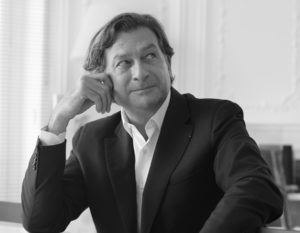
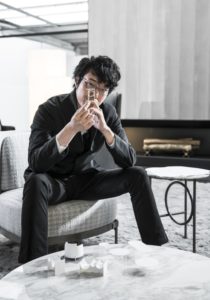
Sebastian Herkner

Sebastian Herkner (born 1981) studied Product Design at HfG Offenbach University of Art and Design. During his studies he began to focus on designing objects and furniture, honing his keen sense for materials, colors and textures. For a short while he then worked for Stella McCartney in London. In the year 2006 Sebastian Herkner founded his own studio. Since that time, he has designed furniture, lamps and smaller items for manufacturers such as Ames, and Tradition, Cappellini, ClassiCon, Dedon, Ex.t, Fontana Arte, Gubi, Linteloo, Moroso, Pulpo, Rosenthal, Schramm Werkstätten, Thonet, Wittmann and Zanotta. Herkner also realizes interior architecture projects and museum and exhibition design. His works have won numerous accolades – among others the IF Award, the Iconic Award and the Elle Deco International Design Award (EDIDA). As Guest of Honor to imm cologne 2016, Sebastian Herkner provided the design for “Das Haus”. Maison&Objet has elected him 2019 “Designer of the Year”.

An unconditional love for traditional craftsmanship paired with a good feel for new technologies, a true flair for color, authentic materials and textures, an unadulterated curiosity for different cultures, for embracing and integrating them, and a commitment to taking responsibility for the things and people one works with, not to mention consideration and respect for all of the details and steps necessary to create an extraordinary object…: Since the success of the Bell Table for ClassiCon in 2012, Sebastian Herkner has never looked back, while remaining true to his word – and himself. Balance and intuition are important and enduring factors in his work, which he sees as a continuous dialogue that straddles the disciplines: It takes him to the far corners of the world in search of almost forgotten crafts techniques, of manufactories that have a tradition going back centuries, to the crafts Sleeping Beauties that he can awaken from their slumber. In the process he creates not just chairs, sofas, lamps, tables, vases and carpets, but an entire cosmos that shines a new light on how objects can appeal to the senses, and where beauty is cultivated from within the process itself and his empathy towards people.

// written by Martina Metzner

READ MORE BRAND DESIGNER’s STORIES

Rodolfo Dordoni

Born in 1954, member of the Milanese tradition that generated designers such as Castiglioni, Zanuso, Magistretti and de Lucchi, graduated in architecture at the Politecnico of Milan in 1979. Since then, he has designed for most of the leading names in the furniture and lighting sectors. Minotti and Rodolfo Dordoni: the company started working with


Read More »

Marcio Kogan

Born in São Paulo, Kogan is the founding architect and professor of all the team at studio mk27. As the architects of the team, Kogan is a great admirer of the Brazilian modernism generation, seek to fulfill the task of rethinking and giving continuity to this iconic architectural movement. The projects of studio mk27 place

Read More »

Vico Magistretti

Vico Magistretti was born in 1920, in Milan. In the post-war period he was actively involved in the reconstruction, both on the theoretical side through the MSA (Movement for Architectural Studies) of which he was one of the founders, and on the practical side with projects for INA-Casa and QT8.

Read More »

Romeo Sozzi

As the third generation of specialized wood craftsmen in cabinet making and restoration, in the seventies, Romeo Sozzi made his debut in interior decoration. Since 1988, he has managed his company, Promemoria, together with his three sons. In time, Promemoria has become not just a producer of internationally high profile furnishing, but a test bed

Read More »

Bruno Moinard

An authoritative presence on the contemporary French scene, Bruno Moinard has developed commercial and cultural projects for an international clientele, from Christie’s to Cartier, from Galerie Lafayette to the Musée des Arts Decoratif.

Read More »

Nendo Design

Since 2002 with Oki Sato providing direction to Nendo studio, it represents a refreshing, refined and cultured alternative to over-celebrated design. Meaning “clay” in Japanese the name Nendo implies the flexibility and malleability of that material their designs for the world of graphics, interior architecture and furniture.

Read More »
Scroll to Top